By S.S. Fowowe, PhD
Lagos – Nigeria, 18 Nov 2026:
OANDO Foundation, in collaboration with other notable educational associations, professional organisations and development partners, has joined efforts to strengthen the professional capacity of preschool teachers through training on the effective implementation and utilisation of the National Pre-Primary Education Curriculum.
This laudable intervention brings together key professional and educational organisations, including the Creative Minds Educators’ Foundation and the Association of Early Childhood and Basic Education instructors in Nigeria (AECBEIN)
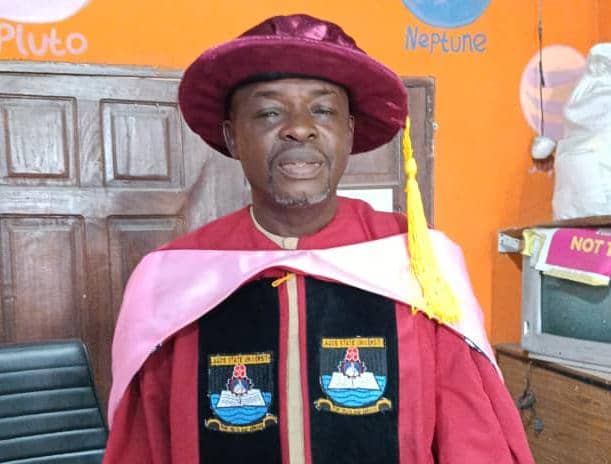
The programme is coordinated by Mr Ebenezer Odetola and Dr Fowowe Simeon Sunday, who serve as the Chief Facilitators of the training programme across Rivers State, Plateau State and Delta State. Their involvement underscores the importance of professional collaboration, expertise sharing and sustained capacity development in repositioning early childhood education in Nigeria.
This intervention is particularly commendable because it goes beyond helping teachers understand the curriculum document. It seeks to equip them with practical classroom skills for translating curriculum objectives into meaningful, child-centred and developmentally appropriate learning experiences.
Of particular importance is the integration and emphasis on three additional thematic areas: Environmental Education, Science, Technology, Engineering, Arts and Mathematics (STEAM), and Child Safeguarding.
These themes are essential to preparing young children for the realities of the 21st century while ensuring that their learning environments remain safe, stimulating, inclusive and developmentally appropriate.
*Classroom Illustrations*
Allow children to plant beans in recycled containers and observe their growth.
Encourage children to separate plastic, paper and food waste into labelled bins.
Take children on supervised nature walks to identify leaves, insects, flowers and birds.
Let children participate in watering plants and keeping their classroom surroundings clean.
Discuss why they should turn off taps after washing their hands.
Encourage children to reuse safe household materials for creative activities.
2. STEAM Education: Introducing Young Children to Creativity, Innovation and Problem-Solving
STEAM should not be mistaken for teaching complicated scientific theories or advanced mathematical concepts to preschool children. Rather, it should introduce them to the basic principles of inquiry, exploration, creativity, experimentation and problem-solving through play.
Practical classroom illustrations:
Science: Allow children to experiment with objects that float or sink in a bowl of water.
Technology: Introduce age-appropriate digital learning tools under adult supervision.
Engineering: Encourage children to construct bridges, houses and towers using blocks, cartons and other safe materials.
Arts: Let children express their imagination through drawing, painting, music, drama and modelling.
*Mathematics*: Engage children in sorting objects by colour, counting bottle tops, identifying shapes and comparing sizes.
For instance, when children are challenged to construct a bridge with building blocks that can support a toy car, they are developing early engineering concepts, mathematical reasoning, creativity, collaboration and problem-solving skills.
The teacher’s responsibility is to create opportunities for exploration rather than simply provide answers to children’s questions.
3. Child Safeguarding: Making Every Preschool a Safe Place to Learn and Grow
Child safeguarding must become an integral part of everyday classroom practice. It involves protecting children from abuse, neglect, exploitation, bullying, discrimination and other forms of harm.
Classroom illustrations:
* Ensure that classroom furniture, toys and playground equipment are safe and age-appropriate.
* Teach children simple body-safety messages, including that their bodies deserve respect and that they can say no to inappropriate touch.
* Establish safe procedures for receiving and releasing children to authorised adults.
* Ensure that children are supervised during outdoor play, toilet routines and other activities.
* Train teachers to recognise possible signs of abuse or neglect and follow appropriate reporting procedures.
* Promote inclusive classroom practices where children with disabilities and other additional needs are treated with dignity and respect.
* Establish clear procedures for responding to accidents, emergencies and child-protection concerns.
Safeguarding is not simply a policy document displayed on the classroom wall; it must be reflected in the daily conduct, decisions and professional responsibilities of every caregiver.
*A Call for Effective Curriculum* *Implementation*
The introduction and strengthening of these themes in pre-primary education represent an important step towards repositioning early childhood education in Nigeria.
However, curriculum reform must not end with workshops, seminars and the distribution of curriculum documents. Teachers need continuous professional development, appropriate teaching and learning resources, supportive supervision and opportunities to demonstrate what they have learnt.
There must also be a deliberate effort to ensure that the knowledge acquired during training translates into observable improvements in classroom practices.
Most importantly, the success of the training should be measured by what happens when the teacher enters the classroom:
* How does the teacher engage children?
* What opportunities are provided for exploration and discovery?
* How are children’s questions encouraged?
* How does the teacher integrate STEAM into everyday play?
* How safe and inclusive is the learning environment?
* How effectively are children learning through play?
* How does the teacher identify and respond to children’s individual developmental needs?
The real test of curriculum implementation is not how well a teacher can explain the curriculum during a workshop, but how effectively the teacher translates its provisions into meaningful learning experiences for children.
*The Power of Professional Collaboration*
The collaboration involving OANDO Foundation, Creative Minds Educators’ Foundation and the Association of Early Childhood and Basic Education Instructors in Nigeria (AECBEIN) demonstrates the importance of partnerships in advancing the quality of early childhood education.
The coordination and facilitation provided by Mr Ebenezer Odetola and Dr Fowowe Simeon Sunday across Rivers, Plateau and Delta States also highlight the value of bringing professional expertise, field experience and practical classroom knowledge together.

Such partnerships should not be regarded as isolated training interventions. They should become part of a sustained national movement for improving the professional competence of preschool teachers and strengthening the quality of early childhood education delivery.
There is a need to replicate, sustain and expand this initiative across other states of the federation so that more caregivers can benefit from the professional knowledge and practical skills required for effective curriculum implementation.
*OANDO Foundation and its collaborating organisations therefore deserve commendation for contributing to the professional development of preschool teachers and the advancement of quality early childhood education in Nigeria.*
* After all, the foundation of a nation’s educational future is laid not at the university level, but in the earliest years of a child’s life.
The quality of education a nation provides for its youngest children is a reflection of how seriously it takes its future.

*Chief Facilitators of the Programme*
* Mr Ebenezer Odetola
* Dr Fowowe Simeon Sunday
*Programme coverage*: Rivers State, Plateau State , Delta State
In collaboration with OANDO Foundation, Creative Minds Educators’ Foundation and Association of Early Childhood and Basic Education Instructors in Nigeria (AECBEIN).